Tailor-made training for media and communications professionals
- Which stories get commissioned?
- What and whose knowledge is treated as expertise?
- Which images and language have become the default?
- Who is centered in a story and whose voices are left out?
- Which assumptions shape your reporting?
- Who is seen as capable to lead the next project?
Inclusive journalism starts with asking better questions. This training helps you become more confident about inclusivity and gives your team practical tools to follow through.

“Sanne is not only a highly qualified and dedicated trainer, but also a great conversation partner and sounding board with a practical approach and a fantastic sense of humor. I am grateful that BNR Nieuwsradio gave us the opportunity to work together.”
— Maria Punch, BNR Nieuwsradio, Netherlands
Four ways to rethink your reporting
#1 Change perspective
Every journalist or content creator brings a perspective to their work. We explore positionality as a practical tool for recognizing how our backgrounds, identities, and professional roles shape what we notice and what we miss.
Goal: Become more conscious of your personal perspective.
Participants examine:
- Positionality and blind spots
- Confirmation bias and how it shapes reporting
- Who has the power to define a story
- Who gets represented and quoted
- Representation versus participation
- How power operates between journalists and the communities they cover
#2 Understand differently
Many assumptions embedded in journalism have histories. We look at anti-racist thinking and practice, and at coloniality: the ways colonial patterns of power, knowledge and hierarchy continue to shape our world long after formal colonial rule ended.
Goal: Adapting the framework of a decolonial lens to storytelling to the history, culture, language, and power dynamics of the place where you work.
Participants explore:
- What does a decolonial lens mean?
- How does coloniality still show up in journalism today?
- Whose and what kind of knowledge is seen as legitimate?
- How do historical power structures influence contemporary reporting?
- How do these dynamics look different in different local contexts?
#3 Report thoroughly
Language and framing
How seemingly neutral words and labels reinforce stereotypes, hierarchies or assumptions, and how more conscious language changes the frame.
Deep listening
Listening without judgement, making space for people to define their own experiences, and treating communities as participants in a story instead of just sources of information.
Complicating the narrative
A method for identifying assumptions, challenging confirmation bias and deliberately seeking perspectives that complicate your first understanding of a story.
Solutions Journalism
How reporting on responses to problems that closely involve people with lived experience creates more nuanced and inclusive journalism.
More-than-human perspectives
What changes when we ask: “What if nature gets a voice?” Participants explore how journalism can include ecological perspectives and rethink the relationship between people, communities and the natural world.
#4 Become sustainable
Journalists and content professionals who work with people experiencing conflict, poverty, discrimination, displacement, or environmental crisis: how does your report affect their dignity, safety, and well-being? And how can you protect yourself?
A journalism practice that cares about people should also care about the people doing the work.
We explore:
- What does it mean to centre care in reporting?
- What responsibilities do you have towards the people they cover?
- How can reporting avoid becoming extractive?
- What happens to people when a story is published?
- Why is well-being part of inclusive journalism?
- What does collective well-being mean?
Reviews
“It was transformative in ways I did not even expect. It widened my worldview. It changed the way I position myself in the world and the way I approach my job and life.”
— Manuela Callari, science journalist, Italy
“The course has shifted the way I interact not just with the world, but it has given me the confidence to continually critique decolonial theory – even if it means interrogating my own bias.”
— Shafi Musaddique, journalist from the UK
“Sanne’s facilitation was engaging, thoughtful, and truly supportive throughout the entire learning process. She created an environment that encouraged deep reflection and meaningful exploration of the ideas.”
— Suzan Ironsi, communication strategist from Nigeria
Tailored to your context
There is no universal formula for inclusive journalism. The questions facing a rural journalist in South Asia may be very different from those facing a community media organisation in Africa, a newsroom in Europe or a communications team working across borders.
The aim is to let participants examine their own context and create a framework and develop practices that make sense where they work.
What I adapt:
- Examples and case studies
- Language and terminology
- The balance of theory and practice
- Different levels of experience
- Local histories and power dynamics
- Exercises and reporting scenarios
- Your team’s editorial challenges
- Format: in-person, online or blended
What participants leave with
New methods and concepts, and practical questions and tools they can use in their next story. Participants will be better equipped to:
- Recognize their own positionality and blind spots
- Question assumptions and stereotypes
- Listen more deeply to people and communities
- Include a wider range of knowledge and perspectives
- Consider the consequences of their reporting
- Identify power dynamics in a story
- Examine how language shapes representation
- Complicate their initial understanding of a story
- Report on responses and solutions without oversimplifying
- Bring care and well-being into everyday editorial decisions
Sample program / illustration
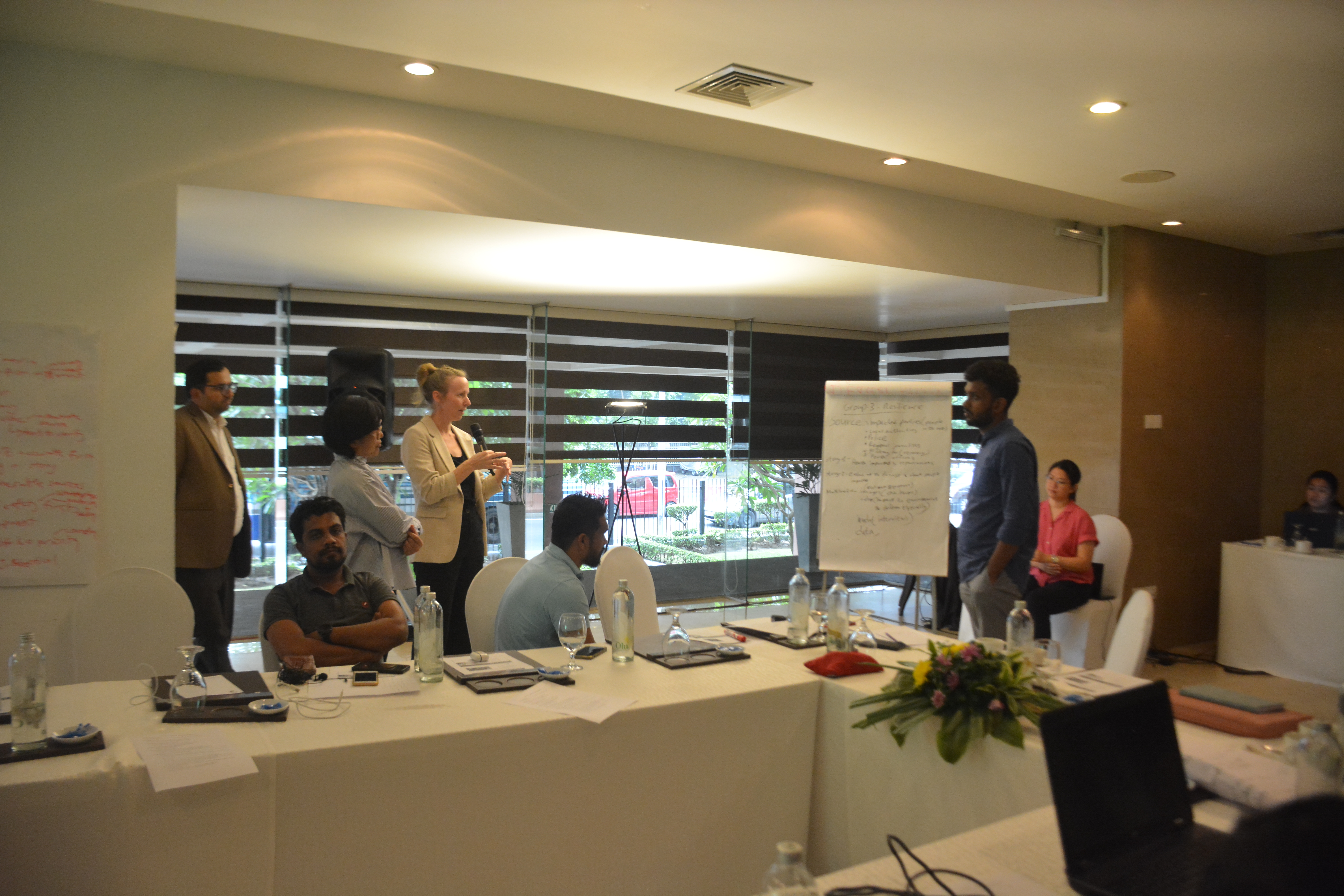
“Whose story, told by whom?” Two days training for a small newsroom
Before
Short conversations with leadership and three or four participants. We collect around twenty recently published stories from the desk.
Day 1
Source audit of those stories: who speaks, as what, and who is spoken about.
Day 1, afternoon
Re-editing live copy: headlines, framing, what is explained and for whom.
Day 2
Leadership practice with scenarios drawn from the intake: assigning, crediting, feedback, running the morning meeting.
Six weeks later
A follow-up session to review what the desk changed, what stuck and what didn’t.
Who is this training for?
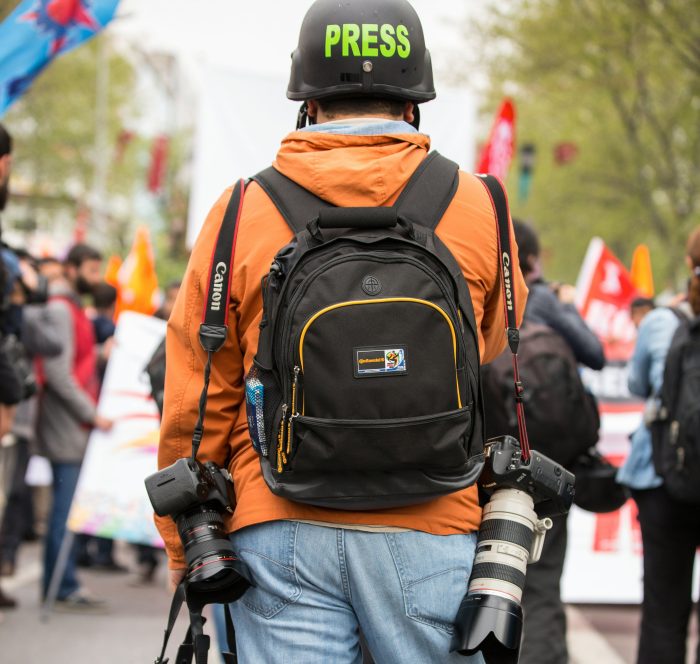
Journalists and reporters
Who want to examine their own reporting practice and develop more inclusive approaches.
Editors and newsroom leaders
who want to embed inclusion into editorial decision-making and newsroom culture.

Community and local media
working closely with communities whose voices are often underrepresented in mainstream media.
NGOs working with journalists
strengthening the quality, inclusivity and responsibility of journalism in a region or theme.

Communication professionals and content creators
who want to understand how power, language and perspective shape the stories they tell.
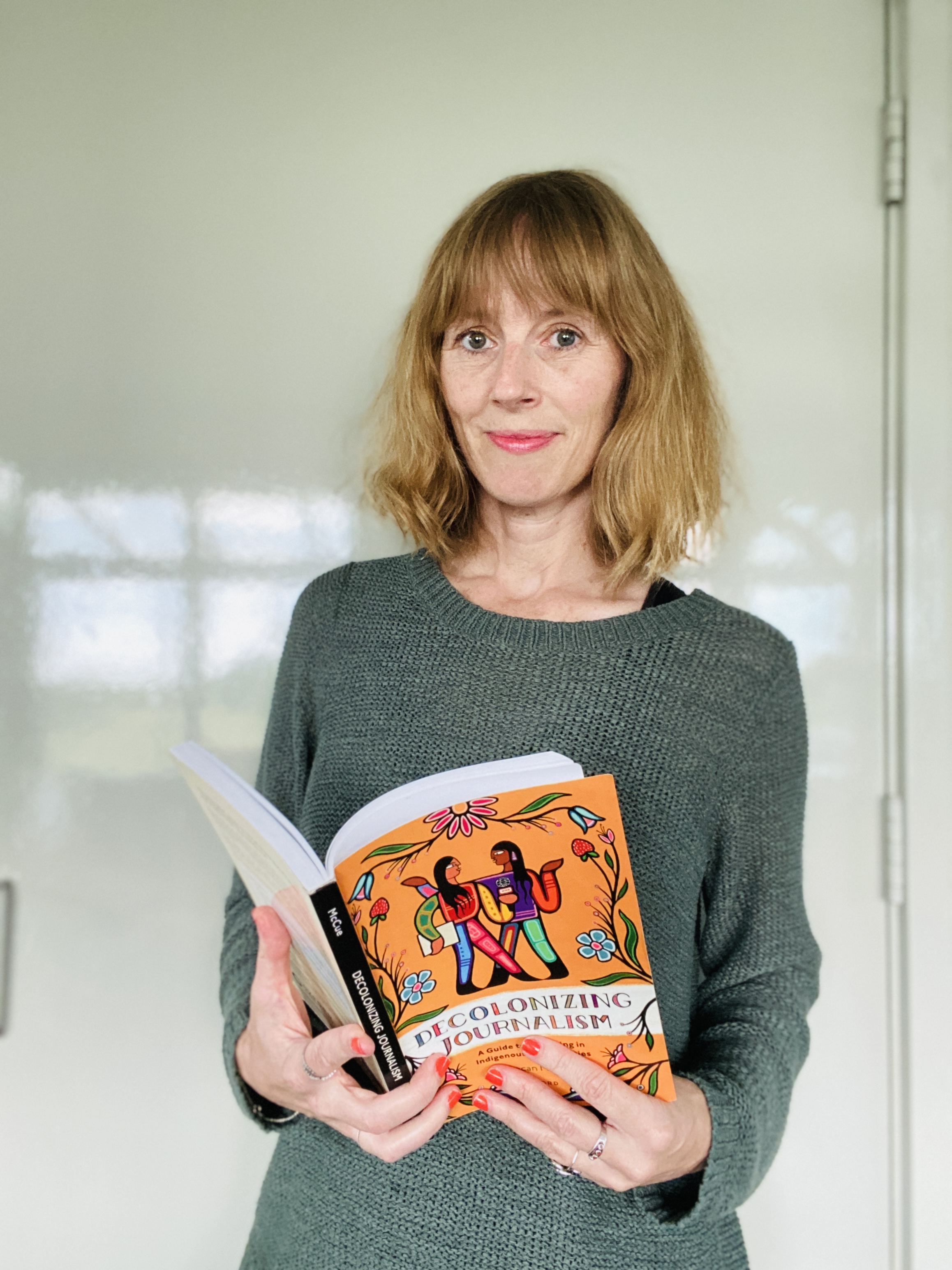
About the trainer
Sanne Breimer
Sanne is the founder of Inclusive Journalism, an initiative rethinking journalism through the lenses of power, inclusion, leadership and well-being. She brings more than a decade of experience in journalism and media management, including leadership roles in Dutch public broadcasting, and trains in Solutions Journalism, Complicating the Narrative and decolonial practice.
Her work helps media professionals not only understand why journalism can reproduce exclusion, but experiment with what they can do differently. Her approach is practical, participatory and grounded in the context of the people in the room.
Let’s design the training around your context
Whether you are organising a workshop for rural journalists, developing a newsroom programme or building a longer-term capacity-strengthening project, the training can be adapted to your goals, participants and local context.
Email me directly: sanne [at] inclusivejournalism [dot] com.


You must be logged in to post a comment.