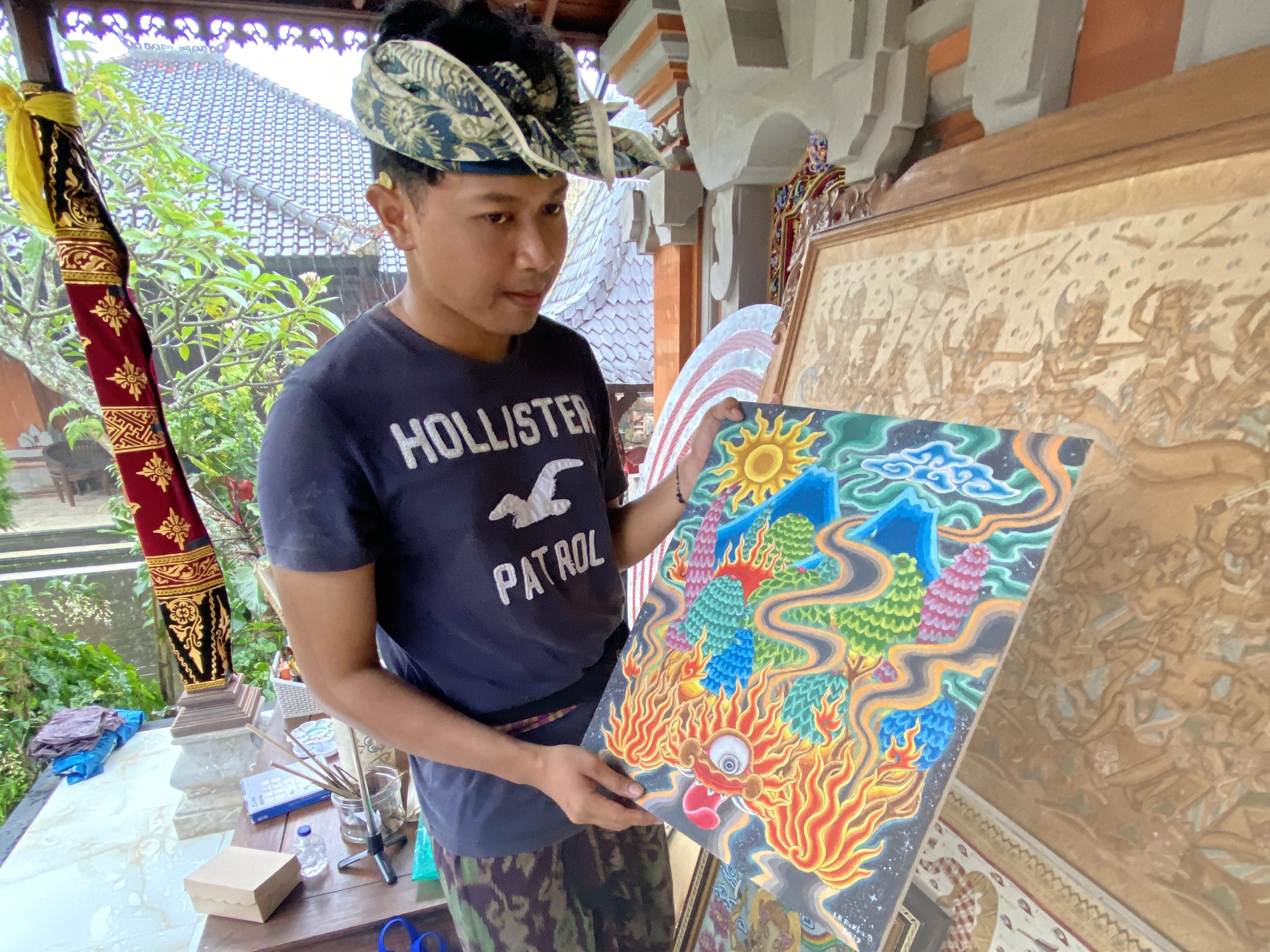
Curator, consultant, and producer of cultural programs, Farah Wardani and I had a coffee in Ubud last week because I wanted to interview her about the Balinese art scene. Farah has an impressive track record in the art space. She has previously lived in Jakarta, Yogyakarta, Singapore, and London.
We met at the art talks at Ubud Open Studios, a week before, and briefly spoke about the current success of Balinese artists and the role of the pandemic, and the growing problems the island faces. When tourists stopped visiting because of COVID-19, artists in Bali were confronted with an identity crisis.
With the current challenges of overtourism, plastic waste, and land grabs for real estate projects, there is a lot for artists and storytellers on the island to respond to. It made me think of what journalism can learn from artists because both professions tell stories and go through a similar development of reinventing themselves.
The global art industry has become institutionalized, just like the global media industry. But countries in the Global South, like Indonesia, are responding with art that is authentic and not necessarily continuing dominant Western aesthetics. Some of the Balinese artists expose new interpretations of traditional ways of working. It reminds me of the importance for journalists to look for initiatives in the Global South/ majority world and get inspiration from other ways of doing journalism.
Art collectives like RuangRupa in Jakarta bring an ideology forward rather than aestheticism. This idea of “lumbung”, originating from Indonesian culture, refers to a system of collective resource sharing and communal well-being. Artists organize themselves as a platform, in a collective sense, and as a contradiction to capitalistic individualism.
Another example is Studio Kalahan in Yogyakarta, founded by leading contemporary Indonesian artist Heri Dono. The name Kalahan can be used in different ways. One of the meanings is the word “compliant”; the artists of the studio chose to comply, because they want to “explore imperfections and failure in the arts” and “build the new infrastructure from a chaotic system.”
Kalahan can also be translated as “loser”, someone who always fails. Farah says that this idea of loser or losing is “very Javanese”. There is a saying that the one who is sane is not afraid to lose. When we know it’s a losing battle, we have nothing to lose.
What if journalism focused on working collectively and building a new infrastructure from chaos? We always act as if we have something to lose, but maybe we’ve lost it already, and embracing it will be the perfect starting point for something better.
The full interview with Farah Wardani will be published in the coming weeks.
 Inclusive Journalism
You must be logged in to post a comment.