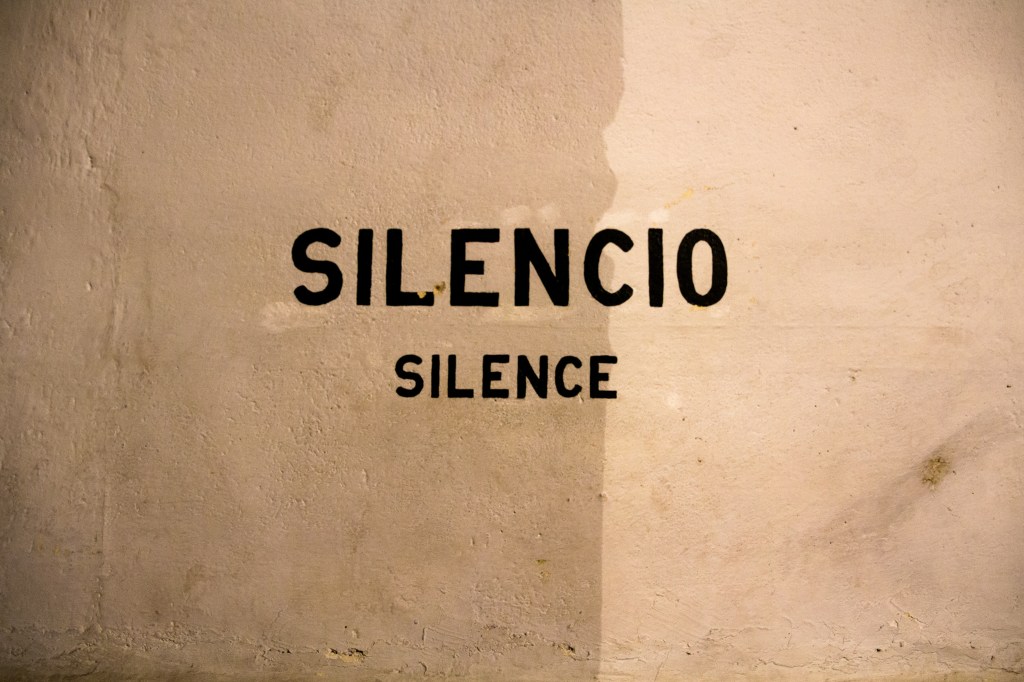
Entrepreneurship can make you doubt yourself, especially when you are working on complex topics or have to relate to the global pluricrisis. I realized this again after returning from my latest ten-day meditation retreat. The silence reminded me of why I started Inclusive Journalism in the first place.
Inclusive Journalism exists for six years this year. I founded it in 2020, shortly after the global protests following Black Lives Matter made visible—again—the lack of representation in media, and how much more effort it would take to change.
Over the years, the work of Inclusive Journalism has deepened and moved into questions of colonial history, power structures in media, and how practicing journalism can become more ethical and responsible. Decolonial thinking became one of the premises of our work, together with constructive journalism and well-being.
I founded Inclusive Journalism because I felt a strong need to contribute to the profession with insights I had gained from working in a diverse media environment. Earlier in my career, I worked as a program manager and editor-in-chief at a radio station that was an anomaly in the Dutch media landscape. It broadcast an eclectic mix of music and featured voices and topics rarely seen in mainstream media. The newsroom reflected the communities it served, and the reporting was done for and by urban youth.
Looking back, there were very concrete reasons why it worked: taking communities seriously, allowing the newsroom to mirror the audience, and working with an entrepreneurial mindset based on experimentation.
My ten years working in that environment had changed me personally. As a white woman from a rural area, working in a newsroom where many colleagues had migrant backgrounds made me aware of blind spots I had never realized before. Conversations during lunch or at the coffee machine showed me how differently people could experience the same society.
Inclusive Journalism was founded on both a strategic insight and a personal shift in perspective. I wanted others in journalism to experience that widening of perspective, too.
An award-winning journalist can be a terrible newsroom leader
It was not always easy to explain the intersection of these topics and why change often starts with a lived or bodily sense of urgency. I realized that much of the change we talk about in journalism ultimately happens through leadership, and so at Inclusive Journalism, we were increasingly focusing on people taking the lead, including those without leadership in their job title.
Editors, managers, and founders are the people making decisions about hiring, story angles, newsroom culture, and long-term strategies, but there are people taking responsibility outside of that role, too. Leadership in journalism is often very narrowly framed by celebrating awards and titles; Pulitzer Prize-winning this, award-winning that. Awards are wonderful achievements, but they are only one part of what shapes journalism. Besides that, an award-winning journalist can be a terrible newsroom leader.
Equally important are the lived experiences of media professionals: working closely with communities, understanding different social realities and cultures, speaking multiple languages, and navigating diverse newsrooms. These forms of knowledge are less visible in the industry, but they shape the quality of journalism in serious ways.
For years, as an entrepreneur, I hesitated to fully step into that leadership space myself, even though I had worked as a manager for much of my career. Media leadership seemed reserved for people with executive titles, contributing to institutional courses, or with careers in large U.S. newsrooms.
The silent retreat helped me see more clearly that leadership is about decisiveness and direction. My decision-making skills had become weaker six years into entrepreneurship. Well-intended advice from friends, professional consultants, entrepreneurial programs, and successful colleagues had, besides helping me execute some valuable work, also planted a seed of doubt that had overgrown my initial confidence like a thick jungle.
Was Inclusive Journalism still the right name for the organization? Have we moved beyond the discussion of representation? Is decoloniality too complex to explain to people?
I realized over the years that the topics I focused on are far more complex than the message that white journalists need to engage more deeply with questions of racism and power. The conversation is much more layered and emotionally charged with different experiences, strategies, and sometimes very different expectations about who should participate in the work. Activists and institutions approach the topic from their own histories and positions. This complexity makes the work more interesting and meaningful, though.
A focus on the breath makes the noise settle
While it sometimes seems hopeless and like swimming against the tide, the journey of my own perspective tilt has left me feeling lighter instead of heavier. The silent retreat meditation practice teaches the importance of continuous awareness rooted in understanding, which is exactly what it takes to change the journalism profession for the better; it is an ongoing process.
Ten days without speaking, reading, writing, or technology does something remarkable to the mind. Slowly, after a few days of focusing on the breath, the noise starts to settle. Thoughts become clearer, and memories return with a surprising precision. During those days, I was reminded of the moment when I first decided to start Inclusive Journalism.
When Black Lives Matter made the lack of diversity in media visible again, it also carried a message to white journalists: you need to do the work. Many people of colour had been advocating for representation for decades. Without structural change from within institutions, nothing would change.
I knew this to be true because I had experienced the shift in priority from leaving the diverse newsroom to work in a national public broadcasting environment where representation was hardly discussed. The knowledge and experience from diverse media environments remained invisible in mainstream journalism. There simply was no interest because the urgency was not felt. In some places, the backlash became explicit, with policies designed to avoid so-called “woke” changes. In a way, that harsh clarity is sometimes easier to deal with than the silence of the middle majority.
BLM created a very clear feeling in my body: this is the moment to act. The silence of the retreat reminded me how easily a feeling like that can get lost in a world full of constant outside input—well-intended advice, strict timelines, endless to-do lists, overwhelming strategies, too many tools and opinions, and constant technological triggers. AI and social media can help inspire and structure ideas, but they can also amplify uncertainty if we turn to them while already doubting ourselves.
Clarity rarely comes from adding more information; you do not always lack knowledge, you might just not be able to hear what you already know. This is why Inclusive Journalism’s third premise is well-being and prioritizing rest and reflection, which also ties into decolonial thinking with care at its core.
Meditation teaches the interconnectedness of everything, a useful concept that can be applied to storytelling, too. It invites you to remember knowledge that has been forgotten or brutally erased. It brings spirituality closer to your experiences without it becoming hippie speech. It makes you reflect on the dominance of Eurocentric and US-centric narratives.
Approaching the world as a place where things act in interdependence humbles your own thoughts and actions. Letting doubt take over the mind then becomes more of an ego thing than reality. You realize you are not as important as your ego suggests.
As journalists, founders, and media leaders, we are expected to make complex decisions every day, about stories, representation, ethics, and impact. But clear thinking is difficult in an environment of constant pressure and noise.
Leadership in journalism does not only require new frameworks or strategies, although we have found methods like solutions journalism highly relevant for a changing ecosystem. It also requires the ability to stop and pause, do nothing and allow the mind to think clearly, and to trust your own judgment without doubt blurring it.
If you read this far, try something simple: be quiet long enough to remember why your work matters.
Subscribe to the Inclusive Journalism Newsletter and sign up for the Leading for Transformation course.
 Inclusive Journalism
You must be logged in to post a comment.