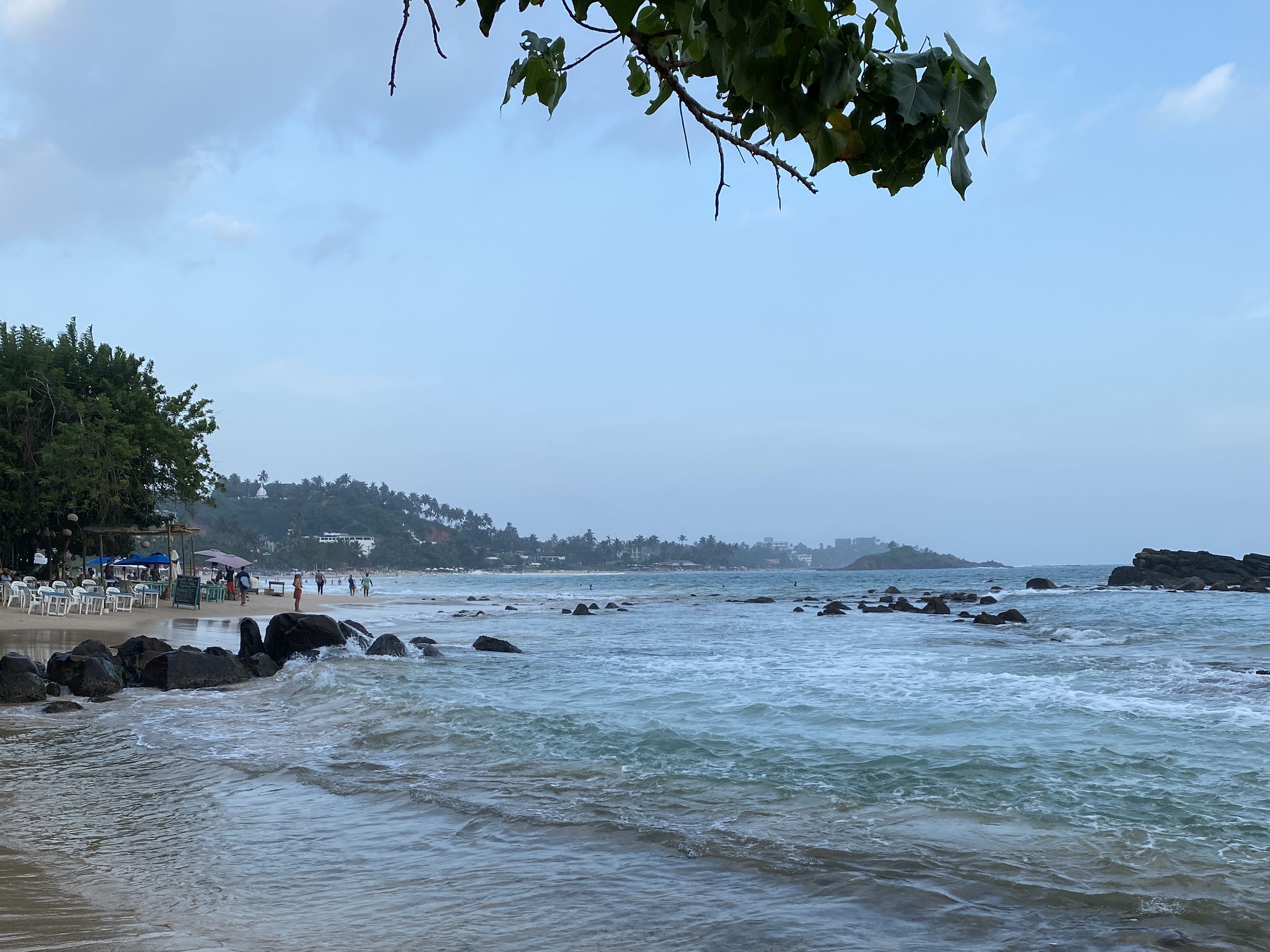
A solo female traveler and digital creator is currently visiting Sri Lanka and posted a rant reel on Instagram about how the southern coast of the country is being gentrified. While lying on the beach, she speaks into the camera — “from the perspective of a Western white woman who comes from America” — about foreign investors setting up cafés and businesses in tourist hotspots who, in her words, don’t seem to do anything “for the community.”
She assumes these businesses have “pushed people out of their homes to build cafés,” without being transparent about “giving back.” She suggests higher-paying jobs, tips, or “some kind of programming” to help locals. If not that, maybe they should “just fuck off” and not build their business there at all.
Some of what she says is worth thinking about. She names her position, admits her discomfort, and openly says she doesn’t know what to do about it. It probably puts her ahead of a lot of call-out content online, which tends to sound entitled.
At the same time, the reel leans heavily on assumptions. There’s no evidence, no local voices, no land ownership history, no zoning laws, no mention of tax structures, government incentives, corruption, or who sold the land and why. Seeing is not the same as knowing.
Her central question is what these businesses give back to the community. But why is the burden placed almost entirely on café owners? What about landlords, developers, local elites, the state, international finance, tourism boards, or IMF-style austerity politics? It’s actually a typical characteristic of capitalism to make individuals visible and systems invisible. It loves villains and heroes in stories, exactly what is often being replicated by the people criticizing it.
Resisting simplification
The logic of the content creator is charity logic: higher pay, tips, visibly showing “giving back,” and community programming. It’s philanthropy as morality. But paying taxes probably matters more than tips, and labour law enforcement matters more than yoga classes or branded goodwill. Redistribution of wealth is not the same as generosity, which often comes with invisible costs.
The North American lady positions herself as an observer, almost as if she’s outside the system she’s describing, while lying on the beach, consuming space, infrastructure, safety, and mobility. There’s no reflection on her own economic footprint, but if you look at other reels on her account, you see her traveling through the country without spending money (hitchhiking), collaborating with an eSIM brand, and running an affiliate shop. What is her presence displacing, and isn’t she somehow extracting from Sri Lankans herself?
Gentrification is a real thing, and tourism for sure accelerates displacement. Not just in Sri Lanka, but in Thailand, the Philippines, Bali, and many other places. I’ve seen it happen in Cape Town as well. Foreign capital often extracts more than it gives, and just because something is legal doesn’t mean it’s just. Weak regulation gets exploited by foreigners and locals alike. Illegal businesses should absolutely be called out.
I’m not defending exploitation, and I’m not saying there’s nothing to be done. I’m just resisting simplification because it doesn’t lead to solutions.
Journalism doesn’t always do better
What’s striking is that even journalism often does not do much better. A recent video by TRT World on Sri Lanka’s east coast focuses on Israeli tourists allegedly running illegal businesses in a surf town. Locals speak anonymously about how their livelihoods are under threat, and what it’s like to feel like strangers in their own country. The video quickly weaves together tourism, illegal work, nationality, military service, and the war in Gaza.
Some of these concerns may well be valid. But from a journalistic perspective, crucial context is missing. There is little investigation into permits, enforcement, local government complicity, or why such businesses can operate at all. Economic conflict becomes nationalized, and structural issues get reframed as identity-based ones. Emotion works on social media, and in many cases, it replaces analysis, even if done by journalistic brands like TRT.
It shows that journalists are not immune to the same pressures as the North American woman. We all seem to like simplified narratives. The algorithm rewards us by making them shareable. In an overload of content, simple stories give emotional clarity and moral gratification, but they also do more damage than we tend to realize.
The framing becomes particularly dangerous when locals are being quoted in reporting without context and when foreigners are blurred into a single category, without distinction between foreign-owned, foreign-managed, legal, illegal, exploitative, and mutually beneficial. In today’s complex world, multiple truths can exist next to each other, but Instagram reels like these don’t show that. I’m not sure if there is space for complex stories on social media to begin with.
I’m also traveling. I’m also part of this system. I try to support local businesses, knowing I can’t do things 100% right. We still have to live in this world. Systemic critique matters, but individual scapegoating won’t get us there.
Maybe the harder question isn’t who to call out, but how to stay with discomfort long enough to ask better questions, without turning judgment into content, and without mistaking visibility for ethics.
So what does a better approach look like?
If simplified narratives do damage, the narrative needs to be complicated. Especially in journalism, and especially for those of us who move through places temporarily.
Good reporting on tourism and gentrification tends to do a few unglamorous things:
- It separates nationality from political economy. Who owns what matters more than where someone is from.
- It traces systems, not just actors. Land laws, visa regimes, tax incentives, corruption, debt, and tourism policy don’t make good reels, but they explain reality.
- It includes local voices with context. Not only what people feel, but why they’re structurally exposed to harm.
- It analyses war, colonial history, and global injustice instead of using them as symbolism.
- It allows contradictions: tourism can create jobs and displacement at the same time. Reporting doesn’t have to resolve that tension to be useful.
That kind of journalism is slower and less viral.
As a traveler, there are also better questions to practice:
- Shift from “giving back” to “not extracting more than you should.”
- Paying fair prices, renting from locals, respecting labour laws, and not bypassing local economies matter more than charity gestures.
- Ask about ownership, management, and what’s been done to support the community.
- Neither “spending nothing” nor “spending a lot” is automatically ethical. The question is where and under what conditions money goes around.
- Stay curious without falling into assumptions.
- Before judging, ask what you don’t yet understand, especially about governance, history, and local power dynamics.
- Include yourself in the critique. Self-reflect!
All of this is about resisting the urge to simplify. It’s not easy, but it’s the only way to match the complexity of the world we live in. Ethics don’t need to be visible to be real.
 Inclusive Journalism
You must be logged in to post a comment.