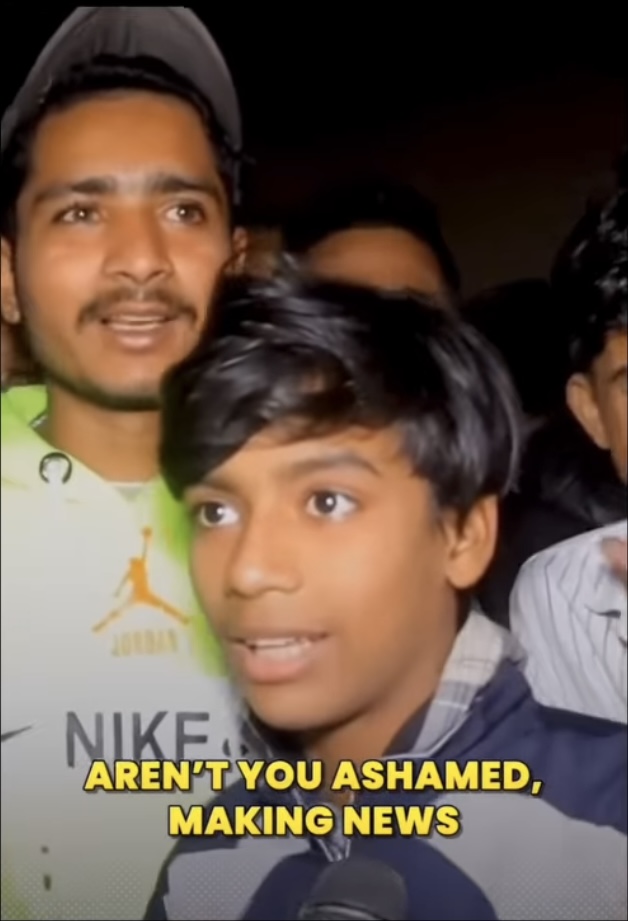
Mohammad Kaif, a young Muslim boy from India, went viral, shutting down a reporter’s attempt to ignite hate during the ongoing India – Pakistan tensions. The journalist provoked him into speaking against Pakistan, even questioning his patriotism when he called for peace.
But the boy didn’t fall for it. Calmly and confidently, he asked a question back to the journalist: “Aren’t you ashamed to make news like this?” and responds: “I have a brain, man!”
In another viral video on Instagram, published by the recently launched independent media Spot On, a young Kashmiri woman was asked if war is the answer. The footage comes from journalist Rajdeep Sardesai who interviewed the young lady days before conflict broke out between India and Pakistan. She responded:
“We have been disconnected from the world too many times and I don’t want it to happen again. Our futures are at stake, we’re just normal students, we want a normal life and not be defined by the conflicts. (…) We are not just victims of political situations, we’re dreamers, we are poets, and we don’t want another war. If I tell someone that I’m Kashmiri and muslim, they’re not going to see me for who I am. They’ll associate stereotypes and I’m expected to apologize for things I don’t even control.”
It’s beautiful to see how wise these young people respond, but it’s at the same time sad to see a reporter in the first video provoke the young Mohammad Kaif so much. Senior research associate at the Reuters Institute for the Study of Journalism Rasmus Kleis Nielsen wrote a powerful piece a month ago for Prospect about how the press lost its touch.
“Trust in news is down dramatically. Much of the public says journalists care more about getting attention than reporting the facts, are only in it for the money, and only a minority believe journalists independently verify the information that they report. The press likes to think of itself as a watchdog. Much of the public thinks of it as a lapdog, or worse.”
Nielsen points out how audiences look for experiences and views that historically have been poorly represented by journalists and the news media, on subjects including Gaza, climate, gender and racial justice. The Kashmir conflict can be added to that list.
The good thing is that both videos went viral online, but what if more media organizations would complicate the narrative with answers like from the two youngsters?
Engage on equal footing
A new generation of news consumers is much more aware of the interconnectedness of topics. 18-year-old Israeli citizen Ella Keidar Greenberg was sentenced to 30 days in Israeli military prison for refusing to enlist in the army. As a so-called refusenik she was interviewed by independent media platform +972 Mag saying:
“For the status quo to keep functioning, people are required to fulfil the roles in the system, like gears in a well-oiled machine. We must work, enlist in the army, kill, get married, start a family, and have children who will continue to serve the occupation, capitalism, and patriarchy … This logic is what trans people, [just] like refuseniks, undermine. That’s why we’re so scary, because the existing system and its reproduction is insured by us, the people, staying disciplined and obedient.”
Ella used the Covid-19 pandemic to read books and educate herself on the topics she mentions. A fascinating aspect in what she shares is that she is conscious of having to give something up in order to improve a situation. She says:
“I think [refusing] allows me to engage with many Palestinian activists on a more equal footing.”
What are you willing to give up for a better world? And how often do you highlight the voices of the younger generation?
Gen-Z language
Understanding the language of Gen-Z is crucial in journalism and Indian journalist Anubha Bhonsle of Newsworthy seems to be successful in finding the right tone. In an Instagram Reel in which she speaks directly to her audience, she explains how to find trustworthy sources in the tsunami of content about the ongoing India – Pakistan tensions. She also calls on her followers to become “comfortable knowing less”. Her followers respond predominantly positive in the comments:

Subscribe to The Inclusive Journalism Weekly and check out the newsletter archive.
 Inclusive Journalism
You must be logged in to post a comment.